





Over the Counter Pain Relievers for Headaches, Which Work Best
Ibuprofen, acetaminophen, aspirin, naproxen and Excedrin Migraine compared for migraine and tension headache, with label doses, safety cautions and the monthly limits that prevent medication overuse headache.


On this pageJump to a section14
- The Over the Counter Pain Relievers for Headaches
- Which Headache Medicine Works Best for Migraine
- Ibuprofen for Migraine
- Tylenol (Acetaminophen) for Migraine
- Excedrin Migraine and Other Caffeine Combinations
- Naproxen, Aspirin and Diclofenac
- Headache Medicine for Tension-Type Headache
- How to Take Headache Medicine So It Works
- Safety of Over the Counter Pain Relievers
- How Many Days a Month Is Safe
- Pregnancy and Breastfeeding
- When to Move Beyond Over the Counter Medicine
- Common questions
- References
The over the counter pain relievers with the best evidence for headaches are ibuprofen, aspirin, acetaminophen (Tylenol) and the acetaminophen, aspirin and caffeine combination sold as Excedrin Migraine. For migraine attacks, ibuprofen 400 mg and the caffeine combination have the strongest trial results. They work best taken early at a full dose, on fewer than 10 to 15 days a month.
Below we compare the options with the trial numbers behind them, the doses on the current US Drug Facts labels, the safety points that matter most, and the signs that it is time for a prescription treatment.
The Over the Counter Pain Relievers for Headaches
Almost every headache product on the shelf contains one or more of five ingredients. Ibuprofen, naproxen and aspirin are nonsteroidal anti-inflammatory drugs (NSAIDs). They block the cyclooxygenase (COX) enzymes that make prostaglandins, chemical messengers that sensitize pain nerves. Acetaminophen is not an NSAID. It acts mainly in the brain and spinal cord, has almost no anti-inflammatory effect, and spares the stomach. Caffeine is not a pain reliever by itself, but it boosts the others. None of these target migraine biology the way a triptan or a gepant does, but for mild to moderate attacks and most tension-type headaches they are often enough.
| Ingredient | Common US brand | Strength per pill | Label directions for adults | Label maximum in 24 hours |
|---|---|---|---|---|
| Ibuprofen | Advil, Motrin IB | 200 mg | 1 every 4 to 6 hours; 2 if 1 does not help | 6 tablets (1,200 mg) |
| Solubilized ibuprofen | Advil Migraine | 200 mg | 2 capsules with a glass of water | 2 capsules (400 mg) |
| Naproxen sodium | Aleve | 220 mg | 1 every 8 to 12 hours; 2 allowed for the first dose | 3 tablets (660 mg) |
| Aspirin | Bayer Extra Strength | 500 mg | 1 or 2 every 4 to 6 hours | 8 caplets (4,000 mg) |
| Acetaminophen | Tylenol Extra Strength | 500 mg | 2 every 6 hours | 6 caplets (3,000 mg) |
| Acetaminophen, aspirin and caffeine | Excedrin Migraine | 250 mg, 250 mg and 65 mg | 2 caplets with a glass of water | 2 caplets |
These doses come from the current Drug Facts labels.1,2,3,4,5,6 Prescription doses of some of these drugs are higher, so follow your clinician if their directions differ, but do not go above the label on your own. Diclofenac, which also has good migraine data, is sold by mouth in the US only by prescription, for example as a 50 mg powder (Cambia) mixed in water.7 The over the counter diclofenac gel is for joint pain, not headache.
Which Headache Medicine Works Best for Migraine
The fairest comparison comes from Cochrane reviews, which pool placebo-controlled trials of each drug taken for a migraine attack of moderate or severe pain. The number needed to treat (NNT) is how many people must take the drug for one extra person to benefit compared with placebo. Lower is better.
| Drug and dose | Pain-free at 2 hours | Headache relief at 2 hours | NNT, pain-free / relief |
|---|---|---|---|
| Ibuprofen 400 mg | 26% vs 12% placebo | 57% vs 25% | 7.2 / 3.2 |
| Ibuprofen 200 mg | 20% vs 10% | 52% vs 37% | 9.7 / 6.3 |
| Aspirin 900 to 1,000 mg | Better than placebo | Better than placebo | 8.1 / 4.9 |
| Acetaminophen 1,000 mg | 19% vs 10% | 56% vs 36% | 12 / 5.0 |
| Naproxen 500 to 825 mg | 17% vs 8% | 45% vs 29% | 11 / 6.0 |
| Diclofenac potassium 50 mg (prescription) | Better than placebo | Better than placebo | 6.2 / 8.9 |
| Acetaminophen 500 mg, aspirin 500 mg, caffeine 130 mg | 50.8% vs 23.5% at 6 hours | 59.3% vs 32.8% | Not pooled |
Sources: ibuprofen,8 aspirin,9 acetaminophen,10 naproxen,11 diclofenac12 and the caffeine combination.13
Ibuprofen 400 mg beat 200 mg for headache relief, and 45% still had relief at 24 hours versus 19% with placebo.8 Aspirin 1,000 mg performed about as well as sumatriptan 50 mg.9 Acetaminophen works, but its weaker pain-free result makes it mainly a choice for people who cannot take NSAIDs or aspirin.10
The caffeine combination has its own large trials. In three trials with 1,220 evaluable patients, pain fell to mild or none at 2 hours in 59.3% versus 32.8% on placebo, and nausea, light and sound sensitivity and disability also improved, though the most disabled patients were excluded.13 In a trial of 1,555 people it beat ibuprofen 400 mg on pain relief and pain freedom, and meaningful relief came a median 20 minutes sooner.14
How they compare with prescription drugs
A 2026 network meta-analysis of 25 trials and 22,100 adults ranked the caffeine combination first for pain relief at 2 hours (relative risk 1.76 versus placebo), followed by ibuprofen. For pain freedom, the combination, ibuprofen 400 mg and lasmiditan 200 mg were broadly similar; ubrogepant (Ubrelvy) and rimegepant (Nurtec ODT) were also included.15 All comparisons were indirect, and three of the five authors work for Haleon, which sells Advil and Excedrin. Our review of over the counter painkillers versus gepants covers its limits. Lasmiditan has since been discontinued.
A larger 2024 network meta-analysis of 137 trials and 89,445 people found the best triptans (eletriptan, rizatriptan, sumatriptan and zolmitriptan) most effective for pain freedom at 2 hours, while ibuprofen ranked alongside eletriptan for sustained pain freedom over 24 hours.16 Cheap analgesics are a sound first step for mild to moderate attacks, and triptans remain more effective for many people with stronger ones.
Ibuprofen for Migraine
Ibuprofen (Advil, Motrin IB) is fast, cheap and well tolerated, with the most consistent trial record of the over the counter options. The dose studied in migraine is 400 mg, two standard tablets, and in single-dose trials side effects occurred at the same rate as placebo.8 Dissolved forms act sooner: soluble ibuprofen 400 mg gave more relief than standard tablets at 1 hour, though not at 2 hours.8 Advil Migraine uses solubilized ibuprofen, and its label allows one 400 mg dose in 24 hours unless a doctor directs otherwise.2 The American Academy of Neurology and American Headache Society found evidence that ibuprofen and acetaminophen relieve migraine pain in children and adolescents.17 Children are dosed by weight, so check with a pediatric clinician. Ibuprofen can also reduce the heart-protective effect of daily low-dose aspirin.1
Tylenol (Acetaminophen) for Migraine
Acetaminophen (Tylenol) 1,000 mg makes about 19% of people pain-free at 2 hours, against 10% with placebo.10 That is less than the NSAIDs, but it is gentler on the stomach, kidneys and heart, and it is the preferred pain reliever in pregnancy. Taken with the prescription anti-nausea drug metoclopramide 10 mg, it was about as effective as sumatriptan 100 mg for headache relief at 2 hours.10
The main danger is the liver. The Tylenol Extra Strength label allows up to 3,000 mg a day on your own and warns of severe liver damage above 4,000 mg in 24 hours, with other acetaminophen-containing drugs, or with 3 or more alcoholic drinks a day.5 Acetaminophen is hidden in many cold, flu, sleep and prescription pain products, which is the usual way people overshoot. Ask a doctor first if you have liver disease or take warfarin.5
Excedrin Migraine and Other Caffeine Combinations
Excedrin Migraine contains 250 mg acetaminophen, 250 mg aspirin and 65 mg caffeine per caplet. The adult dose is 2 caplets, which is the dose the trials tested, and the label maximum is 2 caplets in 24 hours.6,13 Store brands with the same ingredients work the same way.
In a Cochrane review across many kinds of acute pain, adding at least 100 mg of caffeine to a standard dose of acetaminophen, ibuprofen or aspirin let about 5% to 10% more people reach good pain relief.18 The trade-off is a higher overuse risk than single ingredients, which puts these products under the stricter 10-day limit described below. The label also notes that a dose holds about as much caffeine as a cup of coffee.6 Our Excedrin Migraine guide has more detail.
Naproxen, Aspirin and Diclofenac
Naproxen (Aleve) lasts much longer in the body than ibuprofen, which is why it is the NSAID most often paired with a triptan to keep an attack from returning. On its own it is less impressive, with a pain-free NNT of 11 at 500 to 825 mg,11 and those trial doses are higher than the over the counter label allows.3
Aspirin 1,000 mg is effective, and adding metoclopramide reduced nausea and vomiting.9 Today it is used most often inside combination products. It should not be given to children or teenagers who have or are recovering from chickenpox or flu-like symptoms because of the risk of Reye's syndrome.4
Diclofenac potassium 50 mg had a pain-free NNT of 6.2 at 2 hours,12 but it is prescription-only in the US, and regular high-dose diclofenac raised major vascular events by about a third in pooled trial data, so it is a poor choice with heart disease.19 Celecoxib oral solution (Elyxyb) is another prescription NSAID made for migraine attacks.20
Headache Medicine for Tension-Type Headache
Most everyday headaches are tension-type headaches: a dull, pressing band on both sides, without the nausea and light sensitivity of migraine. The same medicines help, though trial results are modest:
- Ibuprofen 400 mg: pain-free at 2 hours NNT 14, with side effects no different from placebo.21
- Acetaminophen 1,000 mg: pain-free at 2 hours NNT 22, based on high quality evidence. Doses of 500 to 650 mg were not better than placebo on limited data, and 1,000 mg did not differ from ibuprofen 400 mg.22
- Aspirin 1,000 mg: 55% were satisfied with treatment versus 37% with placebo, on very low quality evidence, and no trial reported pain freedom.23
NSAIDs are the usual first choice, acetaminophen 1,000 mg is a good option when NSAIDs are not suitable, and caffeine combinations are best kept for an occasional bad day. Our tension headache guide covers prevention when headaches become frequent.
How to Take Headache Medicine So It Works
- Take it early. Migraine medicines work best while the pain is still mild, before the pain system becomes sensitized, and guidelines stress early treatment.17 Waiting to see whether an attack is "a real one" makes the eventual dose less likely to work.
- Take a full dose. Ibuprofen 400 mg beat 200 mg in migraine,8 and acetaminophen below 1,000 mg did not beat placebo in tension-type headache.22 Taking half a dose and adding more later lets the attack get ahead of you.
- Match the treatment to the attack. In the DISC trial, matching the first treatment to disability (aspirin plus metoclopramide for moderate disability, zolmitriptan for more severe disability) gave a 52.7% headache response at 2 hours, versus 40.6% and 36.4% when everyone started on aspirin plus metoclopramide and stepped up only after it failed.24 Many people keep a simple analgesic for mild days and a triptan or gepant for severe ones.
- Plan for nausea. Absorption of acetaminophen, aspirin and other NSAIDs is often delayed during an attack.25 If nausea or vomiting is prominent, ask about an anti-nausea medicine or a non-oral treatment; see migraine nausea.
- Skip slow-release forms. Extended-release versions release the drug too slowly to help with an attack.
For the full plan, including non-drug measures, see how to get rid of a migraine attack.
Safety of Over the Counter Pain Relievers
Occasional use at label doses is safe for most adults. Risks rise with frequent use, higher doses, older age and other medical conditions.
Stomach and bleeding
All NSAIDs, including aspirin, can cause ulcers and serious stomach bleeding. The labels list higher risk at age 60 or older, with past ulcers or bleeding, with a blood thinner or steroid, with more than one NSAID, with 3 or more alcoholic drinks a day, and with use beyond the directions.1 In pooled trial data, regular high-dose ibuprofen or naproxen roughly quadrupled serious upper gastrointestinal complications.19 Stop and seek care for fainting, vomiting blood, black or bloody stools or stomach pain that does not improve.1
Coated, "safety-coated" or buffered versions do not prevent serious bleeding, because the damage comes mainly from blocking protective prostaglandins once the drug is in the blood. In a case-control study, the bleeding risk with low-dose plain, enteric-coated and buffered aspirin was similar (relative risks 2.6, 2.7 and 3.1),26 and enteric-coated NSAIDs can still cause ulcers and bleeding further down the gut.27 Frequent users should ask about stomach protection such as a proton pump inhibitor. See the truth about safety-coated NSAIDs.
Heart and kidneys
Every over the counter NSAID except aspirin carries a label warning about heart attack, heart failure and stroke, with higher risk above the directed dose or duration.1 The risk varies. In pooled trials, high-dose diclofenac raised major vascular events and high-dose ibuprofen raised major coronary events, while high-dose naproxen did not significantly raise major vascular events; all NSAIDs roughly doubled heart failure risk.19 Naproxen is therefore generally preferred when heart risk is a concern. NSAIDs also reduce blood flow to the kidneys, so ask a doctor first if you have high blood pressure, heart or kidney disease, cirrhosis, asthma or a past stroke, or take a diuretic.1
| If you | Point to raise with your clinician or pharmacist |
|---|---|
| Take a blood thinner | NSAIDs raise bleeding risk; acetaminophen labels advise asking first if you take warfarin1,5 |
| Take low-dose aspirin for your heart | Ibuprofen may reduce aspirin's protective effect1 |
| Drink 3 or more alcoholic drinks a day | Raises stomach bleeding risk with NSAIDs and liver risk with acetaminophen1,5 |
| Use cold, flu or sleep products | Many contain acetaminophen or an NSAID, so doses can stack up5 |
| Have an aspirin allergy | NSAIDs can cause severe allergic reactions in people allergic to aspirin1 |
How Many Days a Month Is Safe
Using acute headache medicine too often can make headaches more frequent. This is medication overuse headache, and it develops in people who already have a headache disorder such as migraine, not in people taking the same pills for back pain. It is defined as headache on 15 or more days a month after more than 3 months of regular overuse, with thresholds that differ by drug type:28
- Single-ingredient pain relievers (ibuprofen, naproxen, aspirin or acetaminophen alone): 15 or more days a month.
- Combination products (such as acetaminophen, aspirin and caffeine): 10 or more days a month.
- Mixing drug classes (for example ibuprofen some days and a triptan others): 10 or more days a month in total.
Advil Migraine and Excedrin Migraine are more cautious and warn that headaches may worsen with use on 10 or more days a month.2,6 In a large US population study, NSAIDs were linked with a lower chance of migraine becoming chronic at lower headache frequency but a higher chance in people who already had many headache days.29 Needing acute medicine this often is a signal that prevention deserves attention. Our medication overuse checker counts your days, and the guide to medication overuse headache explains treatment.
Pregnancy and Breastfeeding
Acetaminophen remains the first-choice pain reliever in pregnancy, at the lowest effective dose for the shortest time. In September 2025 the US government announced that the FDA would change acetaminophen labeling to warn of a possible association with autism, and professional medical organizations responded that the evidence does not show a causal link.30 In a Swedish study of almost 2.5 million children, sibling comparisons, which control for shared family factors, found no link with autism (hazard ratio 0.98), ADHD or intellectual disability.31 The July 2026 Tylenol Extra Strength Drug Facts label advises asking a health professional before use in pregnancy and does not mention autism.5
The ibuprofen label warns against use at 20 weeks of pregnancy or later unless a doctor directs it,1 and aspirin labels warn against the last 3 months.4 NSAIDs are also generally avoided early in pregnancy; a 2024 meta-analysis of observational studies found a 28% higher risk of congenital anomalies with early exposure, though such studies cannot prove cause.32 That leaves a narrow middle window in which an obstetric clinician may approve ibuprofen. Excedrin Migraine contains aspirin, so check before using it while pregnant.
During breastfeeding, acetaminophen and ibuprofen are the usual choices, and ibuprofen reaches breast milk only in low amounts; aspirin is less favored because of Reye's syndrome.33 See migraine treatment in pregnancy and breastfeeding.
When to Move Beyond Over the Counter Medicine
Talk with a clinician about prescription treatment if your attacks are usually moderate to severe or disabling, if a full early dose has failed across several attacks, if headaches keep returning as the medicine wears off, if vomiting stops you keeping tablets down, if you need acute medicine on 10 or more days a month, or if stomach, kidney or heart problems rule out NSAIDs.
The American College of Physicians 2025 guideline recommends adding a triptan to an NSAID for moderate to severe episodic migraine attacks when the NSAID alone is not enough, and suggests the same with acetaminophen.34 See our overview of triptans for migraine. The American Headache Society lists gepants such as ubrogepant (Ubrelvy) and rimegepant (Nurtec ODT) among the newer acute treatments, an option for people who cannot take or do not respond to triptans.20 Our gepants guide compares them.
Get medical care right away for a sudden severe headache that peaks within a minute, the worst headache of your life, headache with fever and a stiff neck, headache after a head injury, or headache with new weakness, numbness, confusion, vision loss or trouble speaking. A new kind of headache or a change in your usual pattern also needs a medical check before you treat it at home. See headaches that are medical emergencies.
Common questions
What is the best over the counter medicine for a headache?
For most adults with an ordinary tension-type headache, ibuprofen 400 mg is a good first choice, with acetaminophen 1,000 mg as the alternative for people who should avoid NSAIDs. For a migraine attack, ibuprofen 400 mg and the acetaminophen, aspirin and caffeine combination have the most supportive trials. The right choice also depends on your stomach, kidney and heart health.
Is ibuprofen or Tylenol better for migraine?
In placebo-controlled trials, ibuprofen 400 mg made more people pain-free at two hours than acetaminophen 1,000 mg did. Acetaminophen is still useful when NSAIDs are unsafe, such as with ulcers, kidney disease, some heart conditions, blood thinners or later pregnancy. Some people find one works better for them than the other, and a headache diary can show which.
Can I take ibuprofen and acetaminophen together?
They work in different ways and do not interact, so many clinicians allow them to be combined or alternated within each label's daily limit. Keep in mind that taking two pain relievers on the same day still counts toward your monthly medication days. Check with a pharmacist first if you take other medicines or have liver, kidney or stomach problems.
Why does my headache come back after the pill wears off?
Short-acting medicines can stop working before a migraine attack has run its course, so pain returns hours later. A longer-acting drug such as naproxen, or a triptan paired with an NSAID, can help. If headaches return daily or you are taking pain relievers most days, medication overuse headache is possible and worth discussing with a clinician.
Is Excedrin Migraine stronger than regular Excedrin?
No. Both contain 250 mg acetaminophen, 250 mg aspirin and 65 mg caffeine per caplet. The difference is the label: the Extra Strength box allows 2 caplets every 6 hours, up to 8 a day, for general aches, while the Migraine box limits use to 2 caplets in 24 hours.35 Store brands with matching ingredients work the same way.
This article is for educational purposes only and does not replace advice from your physician. Talk with your own clinician before starting, stopping or changing any treatment.
References
- Advil (ibuprofen) tablets, caplets and gel caplets Drug Facts label. Haleon US Holdings LLC; DailyMed version November 2026.
- Advil Migraine (solubilized ibuprofen) capsules Drug Facts label. Haleon US Holdings LLC; DailyMed version July 2026.
- Aleve (naproxen sodium) tablets Drug Facts label. Bayer HealthCare LLC; DailyMed version December 2025.
- Bayer Aspirin Extra Strength (aspirin) caplets Drug Facts label. Bayer HealthCare LLC; DailyMed version December 2025.
- Tylenol Extra Strength (acetaminophen) caplets Drug Facts label. Kenvue Brands LLC; DailyMed version July 2026.
- Excedrin Migraine (acetaminophen, aspirin and caffeine) Drug Facts label. Haleon US Holdings LLC; DailyMed version June 2025.
- Cambia (diclofenac potassium) for oral solution prescribing information. Assertio Therapeutics, Inc.; revised November 2024.
- Rabbie R, Derry S, Moore RA. Ibuprofen with or without an antiemetic for acute migraine headaches in adults. Cochrane Database of Systematic Reviews. 2013;(4):CD008039. doi:10.1002/14651858.CD008039.pub3.
- Kirthi V, Derry S, Moore RA. Aspirin with or without an antiemetic for acute migraine headaches in adults. Cochrane Database of Systematic Reviews. 2013;(4):CD008041. doi:10.1002/14651858.CD008041.pub3.
- Derry S, Moore RA. Paracetamol (acetaminophen) with or without an antiemetic for acute migraine headaches in adults. Cochrane Database of Systematic Reviews. 2013;(4):CD008040. doi:10.1002/14651858.CD008040.pub3.
- Law S, Derry S, Moore RA. Naproxen with or without an antiemetic for acute migraine headaches in adults. Cochrane Database of Systematic Reviews. 2013;(10):CD009455. doi:10.1002/14651858.CD009455.pub2.
- Derry S, Rabbie R, Moore RA. Diclofenac with or without an antiemetic for acute migraine headaches in adults. Cochrane Database of Systematic Reviews. 2013;(4):CD008783. doi:10.1002/14651858.CD008783.pub3.
- Lipton RB, Stewart WF, Ryan RE, et al. Efficacy and safety of acetaminophen, aspirin, and caffeine in alleviating migraine headache pain: three double-blind, randomized, placebo-controlled trials. Archives of Neurology. 1998;55(2):210-217. doi:10.1001/archneur.55.2.210.
- Goldstein J, Silberstein SD, Saper JR, et al. Acetaminophen, aspirin, and caffeine in combination versus ibuprofen for acute migraine: results from a multicenter, double-blind, randomized, parallel-group, single-dose, placebo-controlled study. Headache. 2006;46(3):444-453. doi:10.1111/j.1526-4610.2006.00376.x.
- Mitra A, Franks B, Petruschke R, et al. Comparative efficacy of AAC and ibuprofen versus lasmiditan, ubrogepant, and rimegepant for the acute treatment of episodic migraine in adults: a systematic review and network meta-analysis. Frontiers in Neurology. 2026;17:1884713. doi:10.3389/fneur.2026.1884713.
- Karlsson WK, Ostinelli EG, Zhuang ZA, et al. Comparative effects of drug interventions for the acute management of migraine episodes in adults: systematic review and network meta-analysis. BMJ. 2024;386:e080107. doi:10.1136/bmj-2024-080107.
- Oskoui M, Pringsheim T, Holler-Managan Y, et al. Practice guideline update summary: acute treatment of migraine in children and adolescents: report of the Guideline Development, Dissemination, and Implementation Subcommittee of the American Academy of Neurology and the American Headache Society. Neurology. 2019;93(11):487-499. doi:10.1212/WNL.0000000000008095.
- Derry CJ, Derry S, Moore RA. Caffeine as an analgesic adjuvant for acute pain in adults. Cochrane Database of Systematic Reviews. 2014;(12):CD009281. doi:10.1002/14651858.CD009281.pub3.
- Coxib and traditional NSAID Trialists' (CNT) Collaboration, Bhala N, Emberson J, Merhi A, et al. Vascular and upper gastrointestinal effects of non-steroidal anti-inflammatory drugs: meta-analyses of individual participant data from randomised trials. The Lancet. 2013;382(9894):769-779. doi:10.1016/S0140-6736(13)60900-9.
- Ailani J, Burch RC, Robbins MS, et al. The American Headache Society Consensus Statement: update on integrating new migraine treatments into clinical practice. Headache. 2021;61(7):1021-1039. doi:10.1111/head.14153.
- Derry S, Wiffen PJ, Moore RA, et al. Ibuprofen for acute treatment of episodic tension-type headache in adults. Cochrane Database of Systematic Reviews. 2015;(7):CD011474. doi:10.1002/14651858.CD011474.pub2.
- Stephens G, Derry S, Moore RA. Paracetamol (acetaminophen) for acute treatment of episodic tension-type headache in adults. Cochrane Database of Systematic Reviews. 2016;(6):CD011889. doi:10.1002/14651858.CD011889.pub2.
- Derry S, Wiffen PJ, Moore RA. Aspirin for acute treatment of episodic tension-type headache in adults. Cochrane Database of Systematic Reviews. 2017;(1):CD011888. doi:10.1002/14651858.CD011888.pub2.
- Lipton RB, Stewart WF, Stone AM, et al. Stratified care vs step care strategies for migraine: the Disability in Strategies of Care (DISC) Study: a randomized trial. JAMA. 2000;284(20):2599-2605. doi:10.1001/jama.284.20.2599.
- Tfelt-Hansen PC. Delayed absorption of many (paracetamol, aspirin, other NSAIDs and zolmitriptan) but not all (sumatriptan, rizatriptan) drugs during migraine attacks and most likely normal gastric emptying outside attacks. A review. Cephalalgia. 2017;37(9):892-901. doi:10.1177/0333102416644745.
- Kelly JP, Kaufman DW, Jurgelon JM, et al. Risk of aspirin-associated major upper-gastrointestinal bleeding with enteric-coated or buffered product. The Lancet. 1996;348(9039):1413-1416. doi:10.1016/S0140-6736(96)01254-8.
- Davies NM. Sustained release and enteric coated NSAIDs: are they really GI safe? Journal of Pharmacy and Pharmaceutical Sciences. 1999;2(1):5-14.
- Headache Classification Committee of the International Headache Society. The International Classification of Headache Disorders, 3rd edition. Cephalalgia. 2018;38(1):1-211. doi:10.1177/0333102417738202.
- Bigal ME, Serrano D, Buse D, et al. Acute migraine medications and evolution from episodic to chronic migraine: a longitudinal population-based study. Headache. 2008;48(8):1157-1168. doi:10.1111/j.1526-4610.2008.01217.x.
- Ben Saad H, Barki C, Dergaa I, et al. Paracetamol in pregnancy: navigating clinical uncertainty and avoiding the communication pitfalls of the "measles, mumps, and rubella"-autism controversy: a narrative review. EXCLI Journal. 2026;25:400-426. doi:10.17179/excli2026-9237.
- Ahlqvist VH, Sjöqvist H, Dalman C, et al. Acetaminophen use during pregnancy and children's risk of autism, ADHD, and intellectual disability. JAMA. 2024;331(14):1205-1214. doi:10.1001/jama.2024.3172.
- Chen X, Yang Y, Chen L, et al. Pregnancy outcomes and birth defects in offspring following non-steroidal anti-inflammatory drugs exposure during pregnancy: a systematic review and meta-analysis. Reproductive Toxicology. 2024;125:108561. doi:10.1016/j.reprotox.2024.108561.
- Hutchinson S, Marmura MJ, Calhoun A, et al. Use of common migraine treatments in breast-feeding women: a summary of recommendations. Headache. 2013;53(4):614-627. doi:10.1111/head.12064.
- Qaseem A, Tice JA, Etxeandia-Ikobaltzeta I, et al. Pharmacologic treatments of acute episodic migraine headache in outpatient settings: a clinical guideline from the American College of Physicians. Annals of Internal Medicine. 2025;178(4):571-578. doi:10.7326/ANNALS-24-03095.
- Excedrin Extra Strength (acetaminophen, aspirin and caffeine) Drug Facts label. Lil Drug Store Products, Inc.; DailyMed version December 2025.
Get studies like this by email
Every Friday, the week's migraine studies and news explained in plain language. No ads.
From Cerebral Torque
Our book, our rollers and our tracker. Here is what the people who use them say.


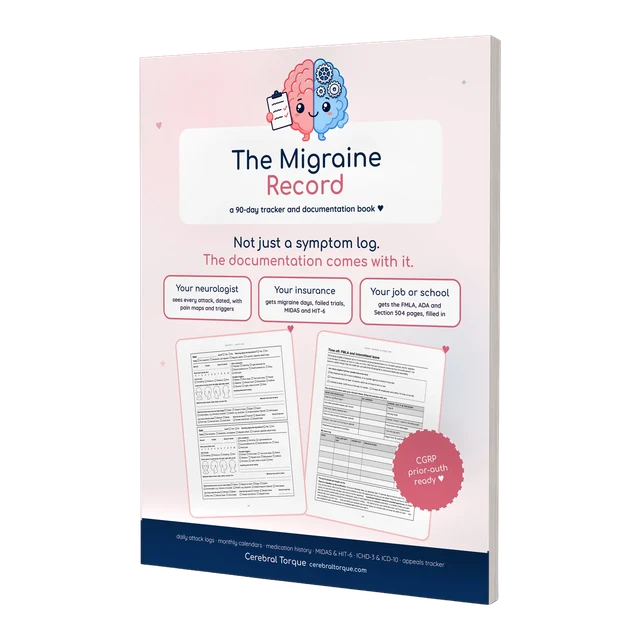
“The ultimate blueprint to navigate migraine care.”
Olivia Begasse de Dhaem, MD, headache specialistSee it on Amazon“This is my favorite migraine roll-on that I’ve tried, and I’ve tried quite a few.”
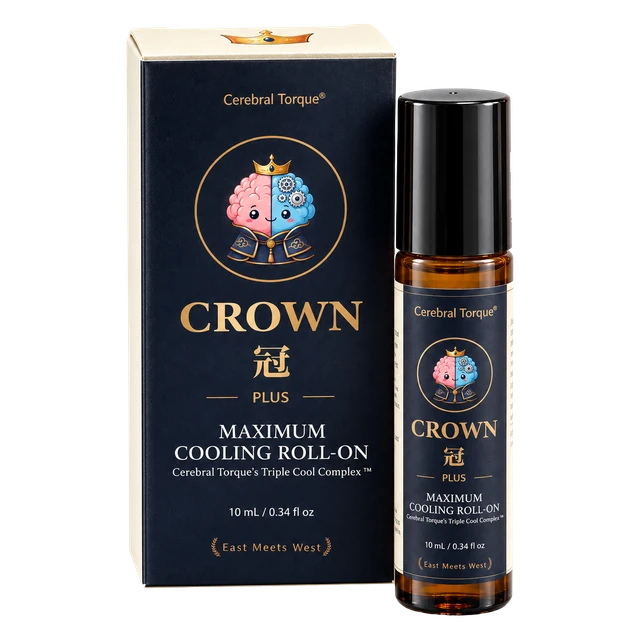
Verified Amazon buyerSee it on AmazonA different formula with more cold. Quick, deep and layered.
Maximum cooling roll-onSee it on AmazonA paper tracker laid out the way neurologists and insurers ask for it.
Tracker and documentation bookSee it on Amazon
About the author
Founder of Cerebral Torque and author of Unraveling Migraine, with a medical background. Trained in computational and cellular neuroscience, with research using Hodgkin-Huxley modeling and clamp electrophysiology to study how neurons respond to rhythmic input. Now focused on migraine medicine and education, and has produced CME for clinicians on hormone therapy, migraine, and HRT delivery.
More about the authorEditorial standardsThis article is for education and is not medical advice. Talk with your own clinician before starting, stopping or changing any treatment.
More on treating an attack
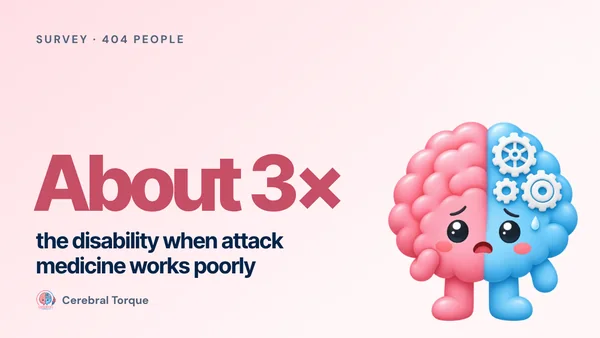
Does Your Acute Migraine Medicine Work Well Enough? What a 404-Patient Study Found
In 404 people with migraine, those whose attack medicine worked poorly had about three times the disability of people with the same number of headache days…
The Most Searched Migraine Questions, Answered
Answers to the migraine questions people search most, from what an attack feels like and how long it lasts to fast relief and when to go…
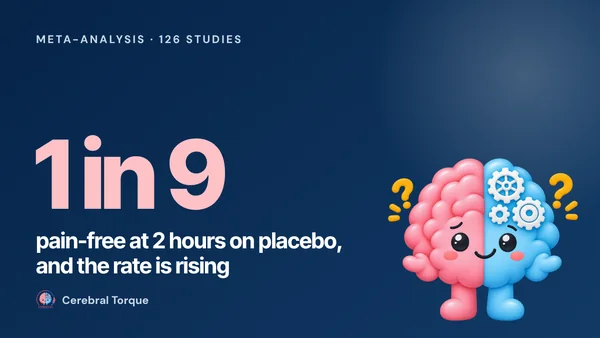
Placebo Response in Migraine Trials, What a 126-Study Analysis Found
About 1 in 9 people are pain-free at 2 hours on placebo, and that rate keeps rising.
