








Guided breathing
A breathing practice that, done daily for three months, may lower attack frequency.
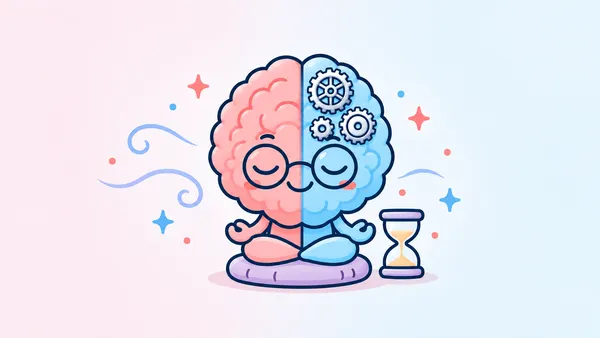
No sound and nothing to install. Press start and follow the circle.
The breathing timer needs JavaScript. The steps below explain the pattern so you can do it without the timer.
Overview
Alternate nostril breathing (ANB) is a yogic breathing technique that's showing real promise for migraine prevention. Unlike acute treatments that target pain once it starts, ANB works differently. It's preventive infrastructure - building nervous system resilience so attacks happen less often in the first place.
The technique involves breathing through one nostril at a time in a controlled pattern. This simple practice, done consistently, appears to shift the autonomic nervous system toward parasympathetic dominance and reduce the overall burden of migraine.
Key Point
ANB doesn't reduce pain intensity once an attack is fully underway. Keep your acute medications for when you need them. This is about making attacks less frequent - not stopping them mid-cycle.
The Technique
The mechanics are straightforward, but getting the rhythm right matters. Aim for about 6 slow breaths a minute, with each inhale and each exhale lasting about 5 seconds. The timer above keeps the pace for you.
The Pattern
Think of it as: Left in, then Right out, then Right in, then Left out. That's one cycle. The key is keeping the pace slow and steady - rushing defeats the purpose.
Practice Protocols
There are two ways to use ANB: regular daily practice for prevention, and extended sessions for specific situations.
Suggested timing:
- Morning - before stress begins
- Midday - reset during a break
- Evening - wind down before bed
When you have more time or need a stronger reset, do a single 20-minute session.
Use this:
- During prodrome (when you sense an attack coming)
- After an attack to restore cognitive function
- During high-stress periods
- When stuck in "fight or flight" mode (racing heart, tension, feeling wired but exhausted)
What to Expect
The benefits fall into two categories: what you'll likely see from consistent daily practice over months, and what a single extended session can do.
- Fewer migraine attacks
- Less overall disability
- Fewer missed days, better functioning
- Shift toward parasympathetic tone
- Improved interoceptive awareness
- Better cognitive clarity
Track Your Progress
Log your daily practice and migraine days. After 3 months, compare your attack frequency and disability to your baseline. Adjust from there.
When to Skip It
ANB isn't always appropriate. There are times when forcing the practice will do more harm than good.
- You have nasal congestion blocking airflow
- You're mid-attack with severe nausea
- It feels forced or increases your stress
The technique should feel calming. If you're struggling to breathe or the practice itself is creating tension, it's not the right time.
Remember
This is preventive infrastructure. It makes your nervous system more resilient so attacks happen less often. It's not an acute treatment - keep your rescue medications for active attacks.
The Evidence
Two recent studies provide the foundation for these recommendations.
Three months of ANB practiced three times daily led to significant reduction in attack frequency (P = 0.002) and disability scores (P = 0.003) compared to control. Published in Primary Health Care Research & Development.
A single 20-minute session improved interoceptive accuracy (P < 0.001) and visuospatial cognition (P < 0.001). Published in Applied Psychophysiology and Biofeedback.
This information is for educational purposes only and should not replace professional medical advice. Consult your healthcare provider before starting any new treatment or making changes to your migraine management plan.
References
- Çöme B, et al. Effects of alternate nostril breathing on migraine frequency and disability: A controlled study. Primary Health Care Research & Development. 2025.
- Ramaswamy P, et al. Single-session alternate nostril breathing improves interoceptive accuracy and visuospatial cognition. Applied Psychophysiology and Biofeedback. 2025.
This tool is for education and to help you talk with your clinician. It is not a diagnosis.
Try another